
Imagine sinking your teeth into a perfectly cooked prime rib, the juices flowing with every bite. It’s not just a meal; it’s an experience. But to achieve that mouthwatering medium rare, you need to nail the temperature. Too high and you’ve got a shoe sole; too low and it’s a sad, undercooked mess.
Understanding Medium Rare Prime Rib
Medium rare prime rib is renowned for its tenderness and rich flavor. The ideal internal temperature for achieving medium rare is 130°F to 135°F. Reaching this temperature ensures a juicy center while maintaining the meat’s natural juices.
During the cooking process, the meat continues to cook slightly due to residual heat, a phenomenon known as carryover cooking. It’s vital to consider this when removing the prime rib from heat. A good practice involves pulling the meat off the grill or oven once it hits about 125°F, allowing it to rest before slicing.
Oven methods can vary, whether using high heat for a short duration or low heat for extended periods. Regardless of the method, consistency in temperature is key. Using a reliable meat thermometer will provide accurate readings and help achieve the desired doneness.
An alternative cooking method involves reverse searing, where the prime rib cooks slowly in the oven before finishing with a sear on a hot grill or skillet. This technique enhances the crust while ensuring the inside remains medium rare.
Flavor development is also important when cooking medium rare prime rib. Seasoning with salt and pepper, or marinating beforehand, can enhance the overall taste. Resting the meat for at least 15 to 20 minutes after cooking further allows the juices to redistribute, resulting in a more succulent final product.
Overall, understanding these factors leads to a perfectly cooked medium rare prime rib. Getting temperatures right plays a crucial role in achieving that luscious, melt-in-the-mouth experience enjoyed by many.
Ideal Temperature for Medium Rare Prime Rib
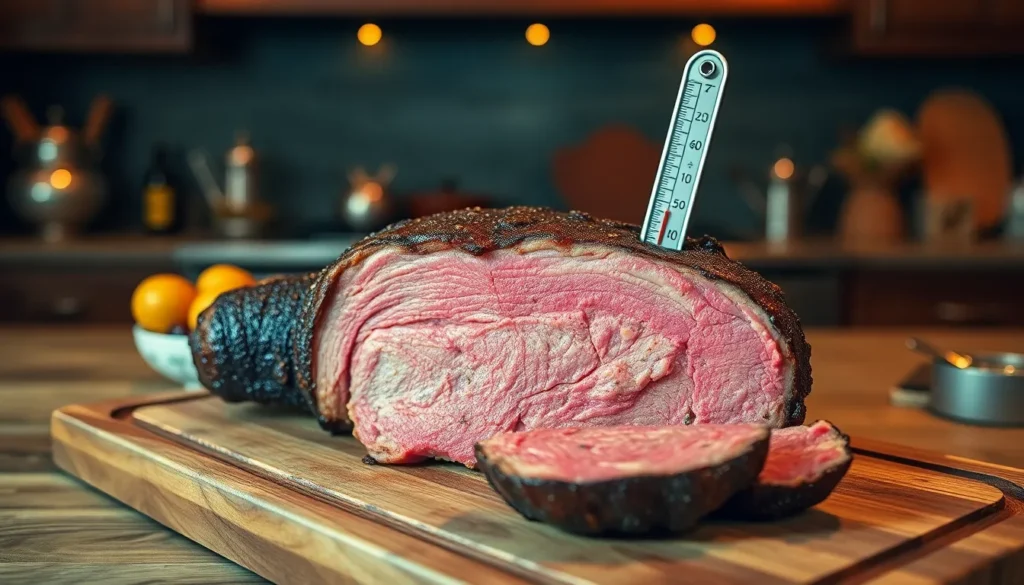
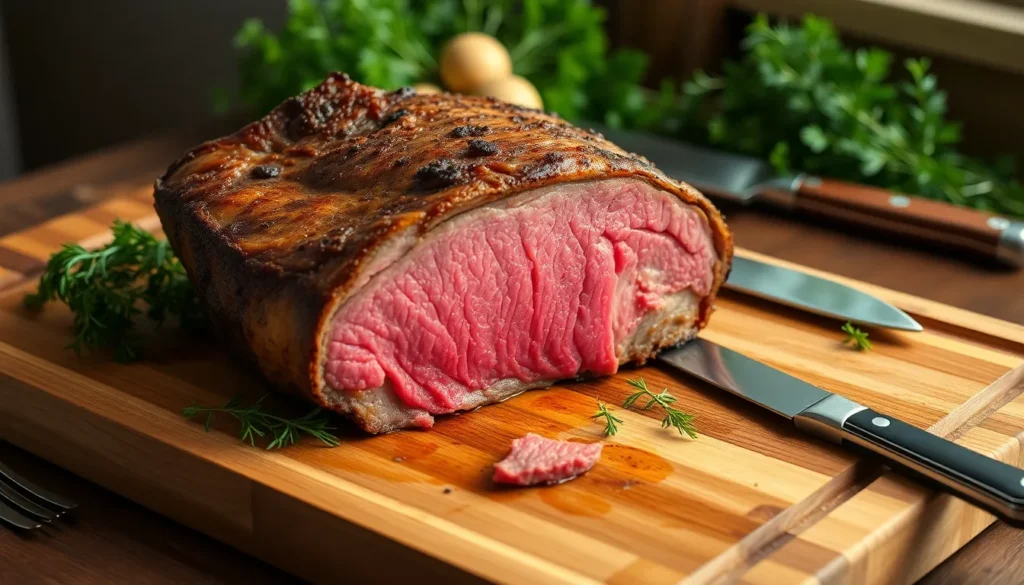
Achieving the right temperature is essential for a delicious medium rare prime rib. The goal is to lock in the juices while ensuring optimal texture and flavor.
Recommended Cooking Temperature
Grilling or roasting prime rib typically requires high heat initially, around 450°F to 500°F. This quick sear caramelizes the surface, enhancing flavors. After that, a drop in temperature to approximately 325°F allows for slow, even cooking. Consistency plays a vital role in this process. Heeding the difference between cooking methods affects the final outcome. Effective temperature management ensures a succulent prime rib.
Target Internal Temperature
Monitoring the internal temperature provides the most reliable method for determining doneness. For medium rare prime rib, the target internal temperature rests between 130°F and 135°F. Some experts suggest removing the rib from heat at 125°F due to carryover cooking. During rest, the residual heat raises the internal temperature slightly. Utilizing a reliable meat thermometer offers accuracy that enhances cooking efforts. Each cooking venture may vary, making attention to temperature crucial for achieving the desired result.
Cooking Methods for Prime Rib
Various methods exist for cooking prime rib, each offering unique benefits for achieving that perfect medium rare. Understanding these techniques helps enhance flavor and tenderness.
Oven Roasting
Oven roasting remains a popular choice for prime rib. Start at a high heat of 450°F to 500°F for searing, then reduce to about 325°F for the remainder of cooking. This approach ensures even cooking, allowing the meat to reach an internal temperature of 130°F to 135°F. A meat thermometer is essential for monitoring doneness, as carryover cooking can raise temperatures slightly during resting. Seasoning the meat beforehand enhances flavor, creating a tasty crust with a tender interior.
Sous Vide Technique
The sous vide technique provides precise temperature control for cooking prime rib. This method involves vacuum-sealing the meat and immersing it in a water bath at a consistent temperature, typically around 130°F for medium rare. Cooking times can extend from several hours to even a full day, allowing for unparalleled tenderness without the risk of overcooking. Once finished, quickly sear the surface in a hot pan or on a grill to develop a crust. Following this final step enhances both presentation and flavor.
Grilling Options
Grilling offers a fantastic opportunity for flavor development when cooking prime rib. For this method, start with direct heat to establish a good sear, followed by indirect heat to finish cooking, maintaining an internal temperature between 130°F and 135°F. It’s crucial to keep a close eye on the meat, using a thermometer to ensure accurate doneness. Adding wood chips or flavored charcoal can introduce additional depth of flavor. Rest the meat before slicing to allow juices to redistribute for a more succulent result.
Tips for Perfectly Cooked Prime Rib
Achieving perfectly cooked prime rib relies on careful attention to detail. The following tips enhance flavor and texture while ensuring the ideal medium rare temperature.
Using a Meat Thermometer
A meat thermometer is essential for accurately monitoring internal temperature. Insert the thermometer into the thickest part of the prime rib, away from bones, for precise readings. Aim for a final temperature between 130°F and 135°F. This ensures the meat remains juicy and tender. For optimal results, check the temperature frequently during cooking, especially as the prime rib approaches the desired doneness. Trusting the thermometer eliminates guesswork and improves overall cooking consistency.
Resting Time Considerations
Resting the prime rib is crucial for optimal results. Allow the meat to rest for 15 to 30 minutes after removing it from heat. This time lets the juices redistribute throughout the meat, creating a more flavorful and moist final product. Cover the prime rib loosely with aluminum foil during resting to retain warmth without steamy moisture loss. The carryover cooking during this resting period can raise the temperature by 5°F to 10°F, further ensuring a perfect medium rare. Prioritizing resting time leads to a delicious and satisfying meal.

