
In a world where everyone’s glued to their smartphones, mobile advertising has become the secret sauce for brands looking to get noticed. Picture this: you’re scrolling through your feed, and suddenly, an ad for a profile picture maker app pops up, perfectly matching your style and interests. That’s the magic of mobile advertising—it’s not just about selling; it’s about connecting in a way that feels personal and engaging.
Overview of High School Music Programs
High school music programs serve as vital platforms for student engagement and development. These programs encompass various disciplines, including band, choir, orchestra, and music theory. Participation in such activities enhances students’ academic and social skills, creating lasting benefits.
Involvement in music programs exposes students to collaborative experiences. Students often engage in performances, competitions, and community events, strengthening their teamwork skills. Music education fosters discipline through practice and commitment, essential traits for academic success.
High school music programs contribute to cognitive development as well. Research indicates that involvement in music improves memory, language skills, and mathematical abilities. Students frequently demonstrate higher overall achievement levels in schools with robust music programs.
Additionally, these programs cultivate a sense of belonging among students. Young musicians often form friendships that extend beyond the classroom, creating supportive social networks. This camaraderie builds confidence, crucial during the often-challenging high school years.
Schools that prioritize music education report higher student attendance and lower dropout rates. A comprehensive music program encourages well-rounded development, ensuring students gain skills applicable to diverse career paths. Vocal and instrumental training nurtures creativity and self-expression, shaping individuals who can contribute positively to society.
Overall, high school music programs significantly influence students’ lives, providing them with essential life skills and enriching educational experiences.
Benefits of High School Music Programs
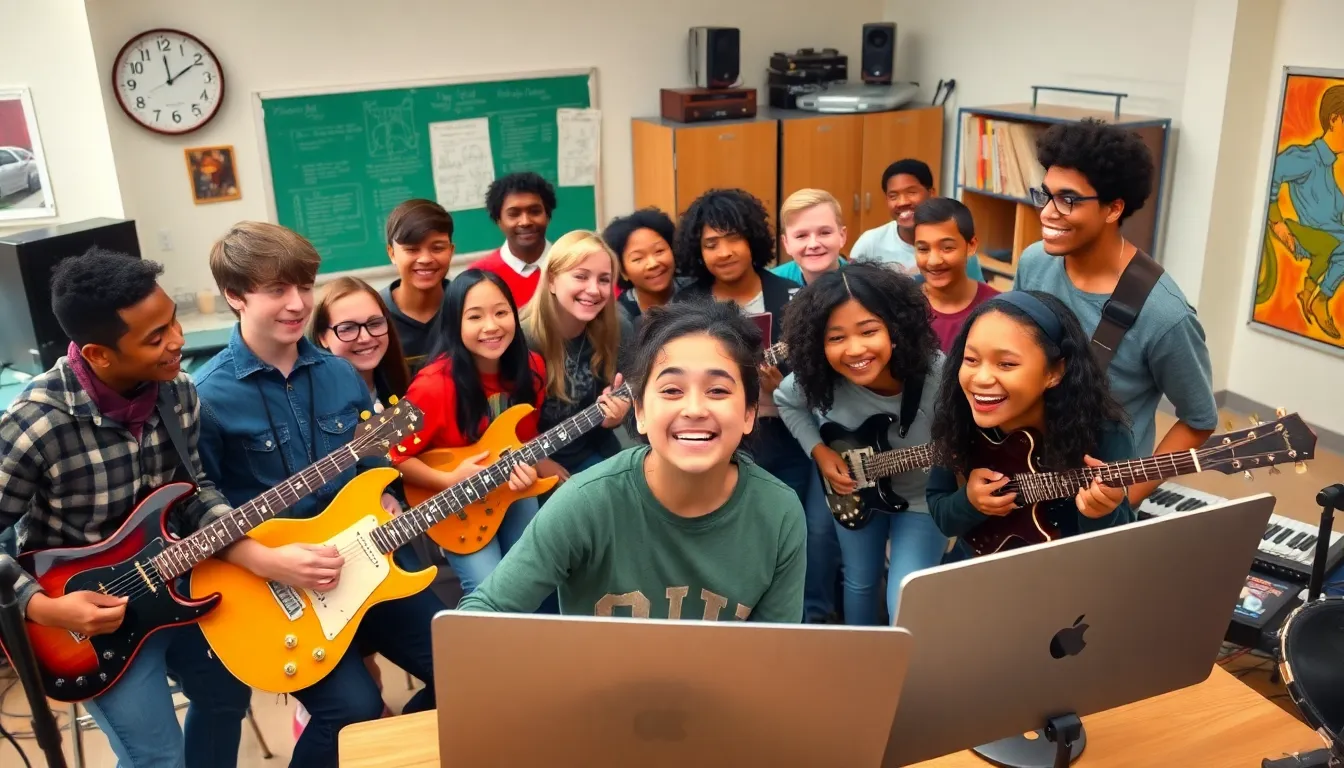
High school music programs provide numerous advantages, impacting both academic performance and social skills development positively.
Academic Performance
Involvement in music correlates with improved academic outcomes. Studies reveal that students participating in music tend to achieve higher grades, particularly in subjects like math and language. Cognitive skills enhance through music education, boosting memory and critical thinking abilities. Students engaged in music theory and practical applications develop a deeper understanding of complex concepts. Furthermore, these programs encourage consistent practice and discipline, traits that contribute to better study habits. Schools with strong music programs note remarkable improvements in overall student achievement levels, demonstrating the integral role of music in a well-rounded education.
Social Skills Development
Engaging in high school music programs fosters robust social interactions. Students collaborate closely during rehearsals and performances, allowing them to forge meaningful connections. Camaraderie builds as they work toward a common goal, creating a sense of belonging. Music groups help shy individuals gain confidence as they perform in front of peers and larger audiences. These supportive environments encourage effective communication and teamwork. Students also learn to navigate challenges together, reinforcing problem-solving skills. Overall, music programs cultivate friendships and interpersonal skills that extend beyond high school, equipping students for future collaboration in various settings.
Types of High School Music Programs
High school music programs encompass various disciplines, each contributing to students’ overall development. Participation in these activities cultivates essential skills and nurtures creativity.
Band Programs
Band programs typically include wind, brass, and percussion instruments. Students perform a diverse repertoire, ranging from classical selections to contemporary pieces. Ensemble participation promotes teamwork and teaches discipline through rehearsals and performances. Research highlights that students involved in band programs demonstrate improved academic performance, especially in math and language subjects. Many schools participate in competitions, offering opportunities to showcase talent while fostering a sense of community among band members. Students often form lasting friendships, enhancing their social development.
Choir Programs
Choir programs provide an inclusive environment for vocalists to explore various music styles. Participants learn vocal techniques, sight-reading, and music theory, which contributes to their musical education. Engaging in choir programs enhances vocal skills, boosts confidence, and fosters collaboration. Performances allow students to connect with audiences and gain recognition for their hard work. Research underscores that involvement in choir programs promotes higher academic achievement and strengthens students’ communication skills. Social bonds formed during rehearsals contribute to a supportive atmosphere.
Orchestra Programs
Orchestra programs encompass string, wind, and percussion instruments, offering students opportunities to perform complex compositions. Musicians develop essential skills such as listening, teamwork, and critical thinking. Rehearsals promote discipline and commitment to musical excellence, leading to improved cognitive development and academic performance. Performance opportunities allow students to experience the joy of live music while building connections with fellow musicians. Studies show that students involved in orchestra programs often achieve higher grades, particularly in subjects requiring analytical skills. Such programs build strong musicianship and enrich the high school experience.
Music Technology Courses
Music technology courses focus on modern techniques for music creation and production. Students learn to use digital audio workstations and production software, enabling them to compose and record music. These courses cultivate technical skills alongside musical understanding, preparing students for careers in the music industry. Engaging in music technology fosters creativity while promoting collaboration on projects. Participation in these courses correlates with improved problem-solving abilities and critical thinking. Many students come together to create original works, enhancing their educational journey while forming valuable connections.
Challenges Facing High School Music Programs
High school music programs encounter several challenges that may hinder their effectiveness. Addressing these obstacles is crucial for ensuring the continued success of these enriching activities.
Funding Issues
Funding issues significantly impact music programs across high schools. Many schools operate under tight budgets where essential resources often prioritize core subjects. Limited financial support restricts access to instruments, sheet music, and experienced instructors. Local and state funding cuts exacerbate these challenges, forcing programs to rely on fundraising activities. Consequently, schools with inadequate financial resources may struggle to maintain quality music education. Without sufficient investments, the longevity of such programs becomes at risk, diminishing their ability to cultivate future musicians.
Student Participation
Student participation in music programs poses another significant challenge. Enrollment fluctuates based on various factors, including students’ interests and extracurricular commitments. While some students thrive in musical environments, others may prioritize academic or sports activities. Societal perceptions of music as less valuable than other subjects also contribute to lower enrollment rates. Moreover, the workload from other classes often discourages students from joining due to time constraints. As participation declines, programs face difficulties in sustaining ensembles and showcasing talent, making it essential to encourage more students to engage in music education.
High school music programs play a crucial role in shaping students’ lives. They not only enhance academic performance but also foster essential life skills like teamwork and communication. These programs create a vibrant community where students can express their creativity and build lasting friendships.
Despite the challenges of funding and participation, the benefits of music education are undeniable. Schools that prioritize these programs witness improved student engagement and success. By investing in high school music programs, educators can ensure that students receive a well-rounded education that prepares them for future endeavors. The impact of music goes beyond the classroom, enriching the lives of young musicians and their communities.

