
Elementary school arts aren’t just about finger painting and glitter explosions; they’re the secret sauce for a well-rounded education. While kids might think they’re just having fun with crayons and clay, these creative activities lay the groundwork for critical thinking, problem-solving, and even social skills. Who knew that mastering the art of the perfect stick figure could lead to future innovations?
In a world where STEM often steals the spotlight, it’s time to give arts their due. Engaging in the arts helps kids express themselves and boosts their confidence, making them feel like mini Picassos or budding Beethovens. So let’s dive into why nurturing creativity in elementary schools is not just a nice-to-have but a must-have for shaping the next generation of thinkers and dreamers.
Importance Of Elementary School Arts
Engaging in arts education in elementary schools plays a crucial role in a child’s development. It nurtures creativity and self-expression while enhancing key skills needed for future success.
Benefits For Cognitive Development
Arts education significantly enhances cognitive skills in children. Participation in activities like painting or music stimulates brain development and improves memory. Skills in critical thinking increase as students learn to interpret and create various forms of art. Hands-on experience with art projects fosters problem-solving abilities, encouraging kids to think outside the box. Furthermore, exposure to arts promotes spatial awareness, which benefits mathematics and science learning. Studies indicate that students involved in arts programs score higher on standardized tests, demonstrating how arts education strengthens overall academic performance.
Impact On Emotional Well-Being
Involvement in arts positively influences children’s emotional health. Creating art allows children to express their feelings freely, which can alleviate stress and anxiety. Collaborative projects teach teamwork and communication skills, fostering social connections that enhance self-esteem. Art can serve as a therapeutic outlet, helping children process their emotions and cope with challenges. Developing these emotional tools contributes to resilience in various life situations. Research shows that students engaged in arts education report higher levels of confidence and happiness, highlighting the importance of emotional growth alongside academic achievement.
Types Of Arts Programs In Elementary Schools
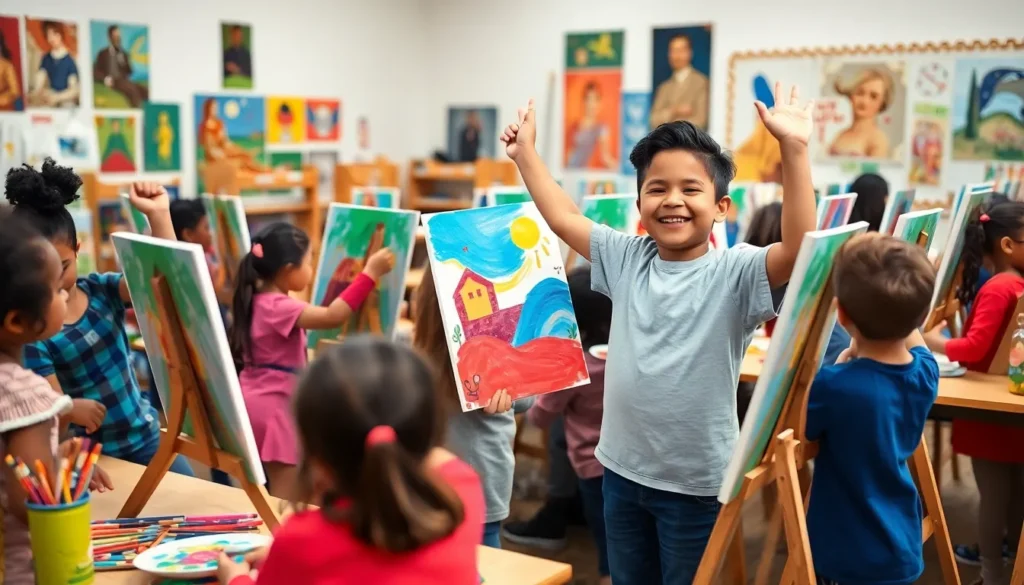
Elementary schools offer diverse arts programs that enrich students’ educational experiences. These programs fall primarily into two categories: visual arts and performing arts.
Visual Arts
Visual arts programs engage students in creative expression through mediums like painting, drawing, and sculpture. Children develop fine motor skills, learn color theory, and explore various techniques, which help with cognitive and emotional growth. Art projects often encourage experimentation and imagination, allowing kids to express their thoughts and feelings visually. Schools often integrate art history into the curriculum, introducing students to famous artists and different cultures. Collaborative projects foster teamwork while individual assignments build confidence in artistic abilities.
Performing Arts
Performing arts programs introduce children to music, dance, and drama, promoting self-expression and communication. In music classes, students may learn instruments, sing, and explore rhythms, enhancing auditory skills and concentration. Dance lessons provide physical activity, coordination, and an understanding of movement. Drama programs encourage creativity and imagination, helping children develop public speaking skills and confidence. These activities often culminate in performances, giving students the chance to showcase their talents and work collaboratively with peers. Engaging in the performing arts cultivates emotional resilience and enhances social skills, contributing significantly to overall development.
Teaching Methods In Elementary School Arts
Effective teaching methods in elementary school arts foster creativity and engagement. Educators utilize a variety of strategies to enhance students’ artistic experiences.
Hands-On Approaches
Hands-on approaches encourage students to actively participate in the creative process. Activities like painting, sculpting, and crafting provide tactile experiences that stimulate imagination. Teachers often introduce projects that allow children to experiment with various materials. These methods help develop fine motor skills and enhance critical thinking. Moreover, students derive satisfaction from creating tangible works of art. Each project invites exploration and personal expression, contributing to confidence and problem-solving skills.
Integration With Core Subjects
Integration with core subjects enriches the learning experience. Combining arts with subjects like math, science, and language arts enhances comprehension and retention. For instance, measuring ingredients for a craft project incorporates math skills. Lessons that connect art to history may reveal cultural significance, making the learning process more relatable. Collaborative projects foster teamwork, allowing students to engage in shared learning experiences. Ultimately, blending arts with core subjects supports holistic education, ensuring students develop both creatively and academically.
Challenges In Implementing Arts Programs
Implementing arts programs in elementary schools encounters several challenges. Funding and accessibility often present significant obstacles.
Funding Issues
Budget constraints hinder many schools from prioritizing arts education. Limited funds lead to reduced program availability and fewer resources for teachers. According to a report by the National Endowment for the Arts, only 4% of elementary school budgets typically allocate funds for arts programs. Schools struggle to secure grants or sponsorships for these initiatives, which relies heavily on community support. Teachers often find it challenging to create enriching experiences with minimal funding. Some rely on fundraising efforts to keep programs alive, but these efforts may not consistently provide enough financial support.
Access And Equity
Access to arts education varies significantly across school districts. Some regions may offer comprehensive programs, while others lack basic access to art supplies or instructional time. Studies have shown that children from lower-income backgrounds experience less exposure to the arts, thus limiting their creative growth. Equity in arts education remains a critical concern, as schools serving diverse populations often face additional barriers. Differences in funding result in disparities that affect students’ opportunities to engage in visual and performing arts. Advocating for equitable access ensures that all children benefit from quality arts education, promoting creativity and personal expression.
Arts education in elementary schools plays a vital role in shaping well-rounded individuals. It nurtures creativity and self-expression while enhancing critical thinking and emotional well-being. By integrating arts into the curriculum, students not only develop essential skills but also gain confidence in their abilities.
Despite the challenges of funding and accessibility, the value of arts programs cannot be overstated. They provide a necessary outlet for children to explore their imaginations and collaborate with peers. Ensuring equitable access to quality arts education is crucial for fostering future innovators and thinkers. Investing in these programs is an investment in the holistic development of every child, paving the way for a brighter future.

