
Imagine a classroom where every student feels like a superstar, regardless of their unique challenges. Inclusive education makes that dream a reality, transforming traditional learning environments into vibrant hubs of diversity and collaboration. It’s not just about checking boxes; it’s about creating a space where everyone can shine and contribute their own special spark.
Understanding Inclusive Education
Inclusive education creates a classroom environment where every student feels valued and empowered. This approach transforms traditional learning spaces into dynamic, diverse hubs that foster collaboration.
Definition and Key Principles
Inclusive education refers to an educational model that integrates all students, regardless of their abilities or challenges. Equity stands as a fundamental principle, ensuring that each student has access to the same educational opportunities. Community involvement enhances the learning experience by incorporating various perspectives. Flexibility in teaching methods accommodates diverse learning preferences. Continuous assessment and adjustment of strategies support individual needs, fostering a supportive environment.
Importance of Inclusive Education
Inclusive education promotes social interaction among students with different abilities. This interaction builds empathy and respect, preparing students for a diverse society. Academic benefits often arise from inclusive settings, as students learn from one another’s strengths. Creating a sense of belonging enhances self-esteem, which positively impacts mental health and well-being. Education systems that embrace inclusivity reflect societal values of diversity and respect for all individuals.
Benefits of Inclusive Education
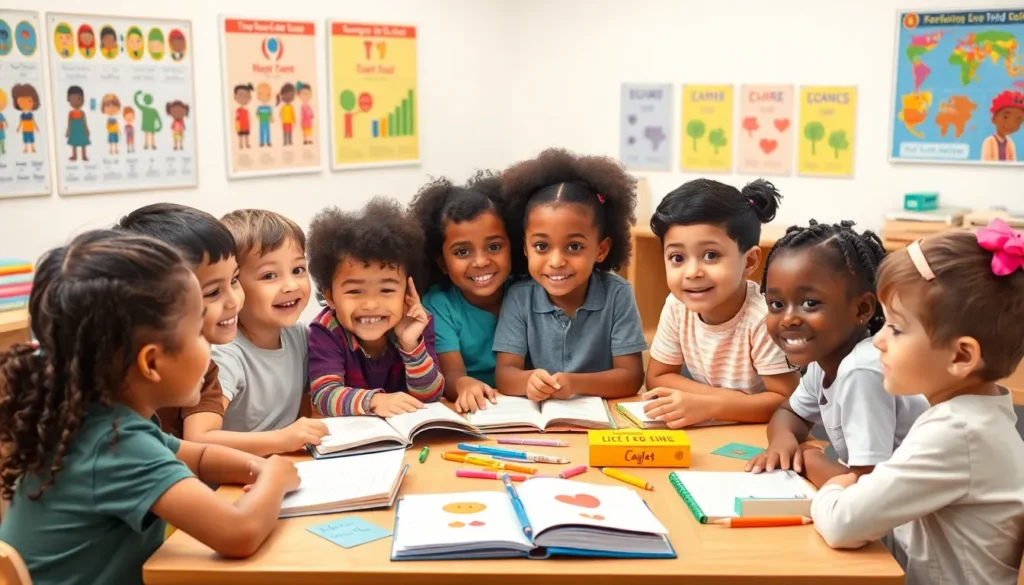
Inclusive education fosters an environment where diverse learning styles and abilities thrive. Students benefit on multiple levels, enhancing their overall educational experience.
Academic Advantages
Academic performance improves in inclusive settings. Research shows that students demonstrate higher achievement levels when learning alongside peers. Exposure to various perspectives encourages critical thinking and problem-solving abilities. Collaborative learning promotes engagement, allowing students to share knowledge, which reinforces their understanding of subjects. Furthermore, teachers adapt their methods to meet diverse needs, enhancing personalized learning. These adjustments often benefit the entire classroom, resulting in stronger academic outcomes for all.
Social and Emotional Benefits
Social skills develop significantly in inclusive classrooms. Diverse interactions foster empathy, respect, and understanding among students, cultivating a sense of community. Students learn to appreciate differences and develop friendships across ability levels. Emotional intelligence increases, helping students navigate social situations with confidence. Inclusivity contributes to higher self-esteem, as every child feels valued and accepted. Consequently, students tend to exhibit lower levels of anxiety and depression, promoting overall mental well-being.
Challenges in Implementing Inclusive Education
Implementing inclusive education presents several challenges that educators and institutions face. These obstacles can hinder the effectiveness of this educational model.
Common Barriers
Lack of resources significantly affects successful implementation. Schools often struggle to provide necessary materials and specialized staff. Teacher training also poses a major challenge. Many educators lack the training needed to address diverse learning needs adequately. Additionally, resistance to change can emerge within the school community. Some stakeholders may doubt the efficacy of inclusive practices, creating an environment where innovation stalls. Furthermore, varying policies across districts complicate the landscape. These inconsistencies lead to confusion and fragmentation, impacting the overall quality of education provided to students.
Strategies for Overcoming Challenges
Collaboration among educators can enhance inclusive practices. Forming partnerships with special education professionals fosters shared knowledge and strategies. Regular training sessions for teachers improve skills in addressing diverse needs successfully. Accessing additional funding can also alleviate resource constraints. Schools must explore grants and community partnerships to secure necessary support. Engaging families in the educational process creates a supportive environment. Advocacy for shared understanding and shared goals involves parents and caregivers, boosting engagement. Finally, evaluating policies collectively allows for consistency across districts and ensures that all students benefit from inclusive education standards.
Case Studies of Successful Inclusive Education
Successful inclusive education models can be found across various regions, demonstrating effective practices that bring all students together.
Examples from Different Regions
In Sweden, policies support inclusive education through a strong emphasis on local communities collaborating with schools. Students with disabilities regularly attend mainstream classes while receiving support tailored to their individual needs. In Australia, the ‘Education for All’ initiative champions inclusive practices, showcasing teachers trained to adapt their methods to diverse learners. Several schools have reported improved academic outcomes and enhanced social interactions as students learn from one another in inclusive settings. Brazil’s inclusive reform has seen students with different abilities engage fully in classroom activities, enriching educational experiences for everyone involved.
Lessons Learned
Effective communication proves essential in fostering an inclusive environment. Collaboration among teachers helps address individual learning needs effectively, promoting best practices across schools. Comprehensive training equips educators with tools to implement inclusive strategies confidently. Engaging families strengthens the support network for students, ensuring continuity between home and school. Observations of successful inclusive programs reveal that embracing a flexible curriculum leads to a richer educational experience. Creating a culture of respect and understanding helps students appreciate diversity, preparing them for a collaborative future.
Inclusive education stands as a vital approach to modern learning environments. By embracing diversity and fostering collaboration among students of all abilities, schools can cultivate a sense of belonging that enhances both academic and social outcomes. The journey toward inclusivity may present challenges, but the benefits far outweigh the obstacles.
Through community involvement and adaptive teaching methods, educators can create dynamic classrooms where every student has the opportunity to thrive. As society continues to evolve, the commitment to inclusive education will not only reflect but also shape a more equitable future. Ultimately, prioritizing inclusivity in education prepares students to navigate and contribute positively to a diverse world.

